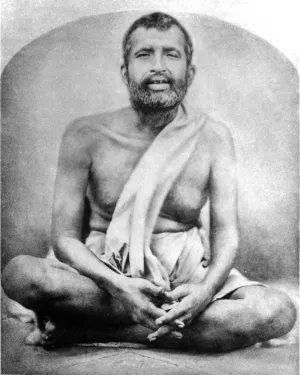
Biography
Sri Ramakrishna Paramahamsa was a Bengali mystic and saint whose ecstatic devotion and direct experience of the divine made him one of the most influential spiritual figures of modern India. Serving as a priest at the Dakshineswar Kali Temple near Kolkata, he engaged in intense spiritual practices from various Hindu traditions and later explored Islam and Christianity, declaring that all paths lead to the same divine reality.
His life was marked by extraordinary mystical experiences, including prolonged periods of samadhi (spiritual absorption) and visions of various forms of the divine. What distinguished Ramakrishna was his childlike simplicity, his accessibility to people from all walks of life, and his ability to transmit spiritual awakening through presence alone.
His primary disciple, Swami Vivekananda, carried his message to the West, introducing Vedanta philosophy to a global audience and establishing the Ramakrishna Mission, which continues humanitarian and spiritual work worldwide.
Teaching and methods
Ramakrishna emphasized devotion (bhakti) as the most accessible path to God-realization in the modern age. He taught that through intense love and longing for the divine, the heart opens and the illusion of separation dissolves. He validated all spiritual paths, encouraging seekers to choose the approach that resonated with their temperament while remaining devoted to their chosen ideal with single-minded dedication.
Selected quotes
“ All troubles come to an end when the ego dies ”
— The Way to God as Taught by Sri Ramakrishna
“ To work without attachment is to work without the expectation of reward. ”
“ The supreme purpose and goal for human life... is to cultivate love. ”