teachings
Teachers and sages
The great teachers of non-duality span centuries and traditions—from ancient sages to modern voices. Each points, in their own way, to the same timeless truth.
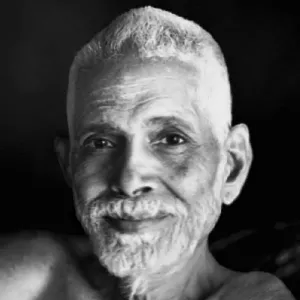
Ramana Maharshi
1879–1950
Ramana Maharshi was an Indian sage who, at the age of sixteen, experienced a profound spiritual awakening that revealed to him his true nature as pure awareness. Without any formal teaching or initiation, he spontaneously realized the Self and spent the remainder of his life at the holy mountain Arunachala in South India.
Key teaching
Self-inquiry (Who am I?)
Primary works
Talks with Sri Ramana Maharshi, Nan Yar (Who Am I?)
Silence is ever speaking; it is the perennial flow of language.
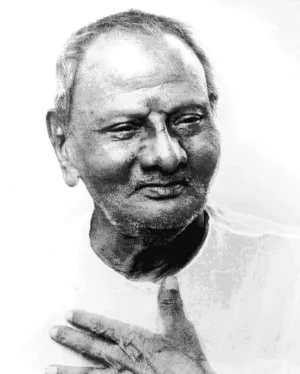
Nisargadatta Maharaj
1897–1981
Nisargadatta Maharaj was an Indian spiritual teacher who lived and taught in the bustling city of Mumbai. A simple shopkeeper who sold bidis (Indian cigarettes), he received initiation from his guru Sri Siddharameshwar Maharaj and attained realization within three years of dedicated practice.
Key teaching
Abidance in "I Am"
Primary works
I Am That, Prior to Consciousness
You are not in the body, the body is in you! The mind is in you. They happen to you. They are there because you find them interesting.
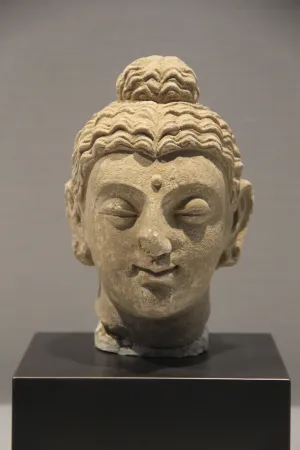
Gautama Buddha
563 BCE–483 BCE
Siddhartha Gautama, who became known as the Buddha ("the awakened one"), was born a prince in ancient India. Despite a life of luxury, he was deeply moved by the suffering he witnessed and renounced his privileged existence to seek the cause of and liberation from suffering.
Key teaching
The Middle Way
Primary works
Dhammapada, Heart Sutra, Diamond Sutra
Do not dwell in the past, do not dream of the future, concentrate the mind on the present moment.
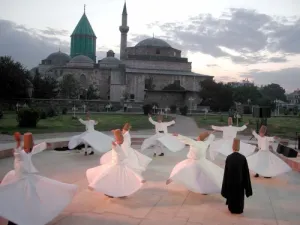
Rumi
1207–1273
Jalāl ad-Dīn Muhammad Rūmī was a 13th-century Persian poet, scholar, and Sufi mystic whose poetry has transcended cultural and religious boundaries to become beloved worldwide. Born in present-day Afghanistan, he settled in Konya (modern-day Turkey), where he became a respected Islamic scholar.
Key teaching
Divine love and union
Primary works
Masnavi, Divan-e Shams-e Tabrizi
You are not a drop in the ocean. You are the entire ocean, in a drop.
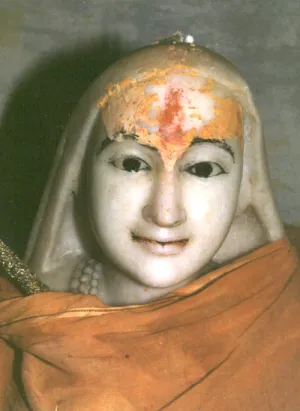
Adi Shankara
788–820
Adi Shankaracharya was an Indian philosopher and theologian who consolidated the doctrine of Advaita Vedanta, one of the most influential schools of Hindu philosophy. In his brief life of only thirty-two years, he composed extensive commentaries on the Upanishads, the Bhagavad Gita, and the Brahma Sutras, establishing the philosophical foundation for non-dual understanding.
Key teaching
Brahman alone is real
Primary works
Vivekachudamani, Atma Bodha, Brahma Sutra Bhashya
To be free from bondage the wise person must practise discrimination between One-Self and the ego-self. By that alone you will become full of joy, recognising Self as Pure Being, C...
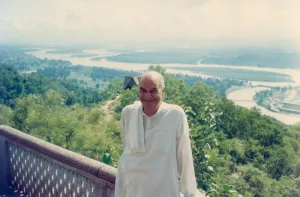
H.W.L. Poonja
1910–1997
H.W.L. Poonja, affectionately known as Papaji, was a direct disciple of Ramana Maharshi whose presence and teachings helped bring Advaita wisdom to countless Western seekers in the final decades of the twentieth century. Born in Punjab, he had spiritual experiences from early childhood and spent years searching for God before meeting Ramana, who showed him his true nature.
Key teaching
Freedom is now
Primary works
Wake Up and Roar, The Truth Is
If there is peace in your mind, you will find peace with everybody. If your mind is agitated, you will find agitation everywhere. So first find peace within and you will see this i...
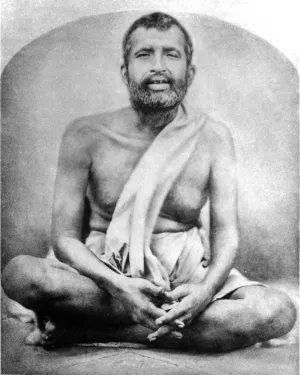
Ramakrishna
1836–1886
Sri Ramakrishna Paramahamsa was a Bengali mystic and saint whose ecstatic devotion and direct experience of the divine made him one of the most influential spiritual figures of modern India. Serving as a priest at the Dakshineswar Kali Temple near Kolkata, he engaged in intense spiritual practices from various Hindu traditions and later explored Islam and Christianity, declaring that all paths lead to the same divine reality.
Key teaching
All paths lead to God
Primary works
The Gospel of Sri Ramakrishna
Bondage and Liberation are of the mind alone.
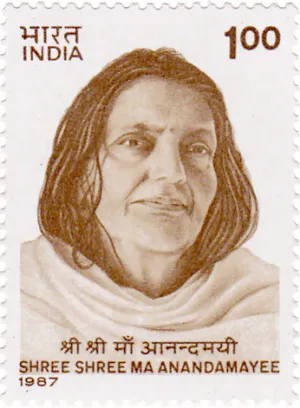
Anandamayi Ma
1896–1982
Anandamayi Ma, whose name means "bliss-permeated mother," was one of the most renowned saints of twentieth-century India. From early childhood, she displayed unusual spiritual qualities, and by her early twenties, she had passed through various stages of spiritual realization without formal instruction, becoming established in a state of continuous divine consciousness.
Key teaching
Divine presence
Primary works
Matri Vani, Words of Sri Anandamayi Ma
I find one vast garden spread out all over the universe. All plants, all human beings, all higher mind bodies are about in this garden in various ways, each has his own uniqueness...

Huang Po
770–850
Huang Po (also known as Huangbo Xiyun) was a Chinese Zen master whose teachings represent some of the most direct and uncompromising expressions of Ch'an (Zen) Buddhism. A successor in the lineage of the Sixth Patriarch, he was the teacher of Linji (Rinzai), founder of one of the major schools of Zen.
Key teaching
One Mind
Primary works
The Zen Teaching of Huang Po
Many people are afraid to empty their minds lest they may plunge into the void. They do not know that their own mind IS the void.
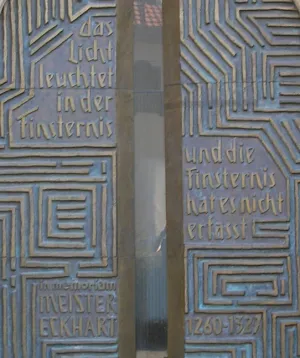
Meister Eckhart
1260–1328
Meister Eckhart was a German theologian, philosopher, and mystic whose teachings on the direct experience of God represent a peak of Western mystical expression. A Dominican friar and scholar, he held important positions in his order and was known as a brilliant preacher who could communicate profound mystical truths to ordinary people.
Key teaching
Detachment (Gelassenheit)
Primary works
Sermons, The Book of Divine Consolation
For the person who has learned to let go and let be, nothing can ever get in the way again.
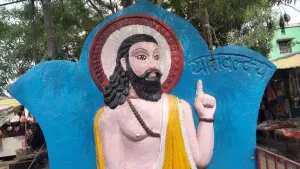
Yajnavalkya
700 BCE–
Yajnavalkya is one of the earliest named sages of the Upanishadic tradition, appearing prominently in the Brihadaranyaka Upanishad. Unlike most Upanishadic wisdom—which emerged anonymously from generations of forest-dwelling contemplatives—Yajnavalkya's teachings are preserved in dialogue form, giving us a rare glimpse into an individual voice from this period. His famous method of "neti neti" (not this, not this) points to the ultimate reality by negating everything that can be objectified. He likely represents just one voice among many anonymous sages who composed these foundational texts of non-dual philosophy.
Key teaching
Neti neti (not this, not this)